The New Gaming Landscape: Trends, Communities, and Business Models Shaping Play Today
Gaming has stopped being a single hobby with a single definition. It is now a constellation of cultures: competitive esports, narrative single-player worlds, casual mobile sessions, creator economies, streaming communities, and even casino-style entertainment that borrows game design patterns. A modern gaming blog is valuable precisely because it can connect these dots—explaining how new business models affect players, how technology changes gameplay, and why communities move from one trend to the next.
A clear example of this “wide-angle” approach is the way FU-2fR presents itself as a computer games blog and then covers topics ranging from esports economics and “gaming trends & tips” to funding models like crowdfunding and comparisons between sweepstakes casinos and video games. Instead of treating gaming as only entertainment, this kind of coverage frames it as an industry—driven by technology, psychology, and monetization.
Esports is no longer “the future”—it is the present
Esports used to be described as a niche scene with a few giant tournaments. Today it looks closer to mainstream sports: professional teams, sponsorships, global audiences, and large media deals. FU-2fR highlights this shift directly by pointing to the scale of esports revenues in recent years. The deeper story behind those numbers is that esports has built a complete ecosystem: competitive ladders that create new talent, streaming platforms that distribute matches, and game publishers who design titles with spectator value in mind.
For players, esports changes everyday gaming culture. Even casual players learn strategies from high-level play, copy “meta” builds, and treat improvement as part of the fun. For brands, it creates a marketing channel built on authenticity: audiences are loyal to teams, creators, and communities, not just to game titles. The result is a feedback loop where competition drives content, and content drives competition.
Crowdfunding and community-backed development
Another major shift is how games are funded. FU-2fR also covers crowdfunding as a tool in video game development, reflecting a world where communities can “vote with their wallets” long before release. Crowdfunding changes power dynamics. It can help innovative projects exist without a traditional publisher, but it also increases responsibility: developers must communicate clearly, show progress, and build trust over time.
From a player perspective, crowdfunding is appealing because it offers participation. Backers feel like stakeholders, not just customers. From a developer perspective, it can be both freedom and pressure. Teams gain creative control, yet they inherit a public roadmap and constant scrutiny. The healthiest crowdfunding projects tend to be those that treat communication as part of production—regular updates, playable demos, honest risk discussions, and realistic delivery windows.
“Casual fun” is now engineered, not accidental
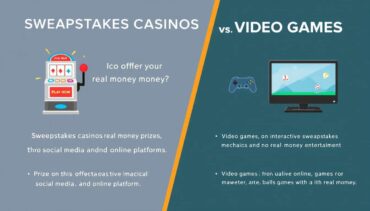
A third trend is the steady professionalization of casual gaming. Mobile games, live service titles, and even non-traditional “game-like” entertainment have become extremely sophisticated at retention. Daily login rewards, streaks, limited-time events, and battle-pass structures are not random features; they are carefully designed behavioral systems. FU-2fR’s comparison of sweepstakes casinos and video games touches on exactly this overlap: both spaces use gamification, virtual currencies, and community features to keep users returning.
This doesn’t mean all gamification is “bad.” When designed responsibly, it can create friendly habits (like practicing a skill) and make progress satisfying. The problem appears when systems are designed to blur entertainment with compulsion. Players benefit most when they understand the mechanics behind the mechanics—how rewards are timed, why certain offers appear, and what patterns are used to encourage spending.
Hardware, aesthetics, and identity
Gaming is also shaped by the tools people play on. Laptops, controllers, and peripherals become part of identity: “the rig” is both performance and lifestyle. Gaming hardware content matters because it helps players make practical decisions—budget vs power, portability vs thermals, upgrade paths vs replacements. When a gaming blog includes these topics, it acknowledges the real-world constraints behind play: not everyone can run the newest release, and optimization knowledge becomes part of the culture.
Where the industry is going next
Looking ahead, the biggest shifts are likely to come from three directions:
Cross-platform continuity: players expect progress to follow them across devices.
Creator-centered ecosystems: mods, community maps, and UGC tools keep games alive for years.
Hybrid entertainment models: gaming will continue to blend with other digital experiences—live events, interactive streams, and casino-style mechanics.
A modern games blog that covers esports, funding models, and the overlap between gaming and other entertainment types offers something valuable: a map of how the ecosystem is evolving, not just a list of releases. FU-2fR’s mix of topics reflects exactly that broader view.